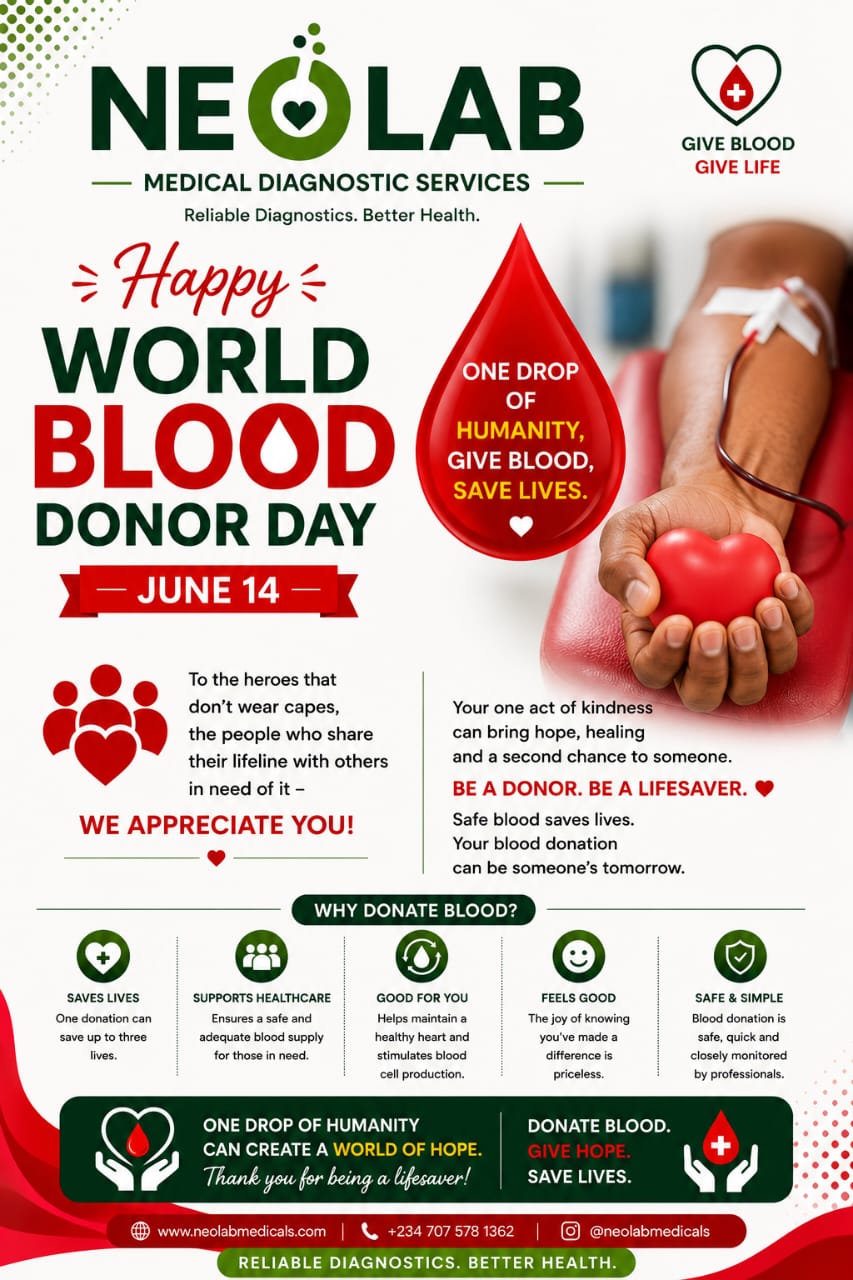
Every year on June 14, the world celebrates World Blood Donor Day, a global event dedicated to recognizing the selfless individuals who donate blood and help save millions of lives every year. This day also serves as a reminder of the ongoing need for safe and regular blood donations to ensure that blood is available whenever and wherever it is needed.
The theme for World Blood Donor Day 2026 emphasizes the power of blood donation in giving patients a second chance at life and strengthening healthcare systems worldwide.
Why Blood Donation Matters
Blood is one of the most valuable gifts a person can give. Unlike many medical supplies, blood cannot be manufactured; it can only come from generous donors.
Every day, hospitals rely on donated blood to:
Save accident and trauma victims
Support mothers during childbirth complications
Treat patients undergoing surgery
Help cancer patients receiving chemotherapy
Manage individuals with blood disorders such as sickle cell disease
Respond to medical emergencies
A single blood donation can help save up to three lives.
Voluntary blood donation remains one of the safest and most reliable ways to ensure a steady blood supply. Unfortunately, many healthcare facilities continue to experience shortages due to insufficient donor participation.
Increasing awareness and encouraging regular voluntary donations can help bridge this gap and improve patient outcomes across the country.
Who Can Donate Blood?
While eligibility criteria may vary slightly, most healthy adults can donate blood if they:
Are between 18 and 65 years old
Weigh at least 50 kg
Are in good general health
Have adequate hemoglobin levels
Have not recently suffered from certain infections or illnesses
A health screening is usually conducted before donation to ensure the safety of both the donor and the recipient.
Common Myths About Blood Donation
Myth 1: Donating blood is dangerous.
Fact: Blood donation is a safe procedure performed using sterile, single-use equipment.
Myth 2: I will become weak after donating blood.
Fact: Most people recover quickly after donation and can resume normal activities within a short period.
Myth 3: Blood donation is painful.
Fact: Apart from a brief needle prick, the process is generally comfortable.
Myth 4: My body will not replace the blood.
Fact: The body naturally replenishes the donated blood components within days to weeks.
Benefits of Blood Donation
While the primary benefit is helping others, blood donation may also:
Encourage regular health checks
Promote awareness of personal health status
Stimulate blood cell production
Foster a sense of community and social responsibility
Most importantly, donors experience the satisfaction of knowing they have helped save lives.
How You Can Help
You do not need to be a healthcare professional to make a difference. You can support blood donation efforts by:
Becoming a voluntary blood donor
Encouraging family and friends to donate
Sharing accurate information about blood donation
Participating in blood donation drives
Raising awareness through social media and community engagement
At Neolab Medical Diagnostics, we recognize the critical role that safe blood plays in modern healthcare. We support initiatives that promote voluntary blood donation, public health awareness, and access to quality healthcare services.
This World Blood Donor Day, we celebrate the heroes who roll up their sleeves to give others a chance at life. Their generosity reminds us that even the simplest act can have a profound impact on someone else's future.
Give Blood. Give Hope. Save Lives.
Join the movement. Become a blood donor. Be someone's hero today.
June 14, 2026 · Nwadike Chioma Esther
World Blood Donor Day 2026: Give Blood, Give Hope, Save Lives